
Article Summary: Hand-dyed yarn is more expensive than many commercially dyed alternatives because the production process involves the use of quality fibres, small-batch production, skilled manual labour, colour development, and individual finishing. The textile-processing guidance published by the Woolmark Learning Centre explains that different dyeing methods involve varying levels of production efficiency and quality, while specialist yarn-dyeing businesses demonstrate how tasks such as washing, drying and labelling add to the final cost. Ultimately, the price of hand-dyed yarn reflects not just the yarn itself, but also the time, technical skill and creative control required to produce distinctive colours.
What Makes Hand-Dyed Yarn Different from Commercial Yarn?
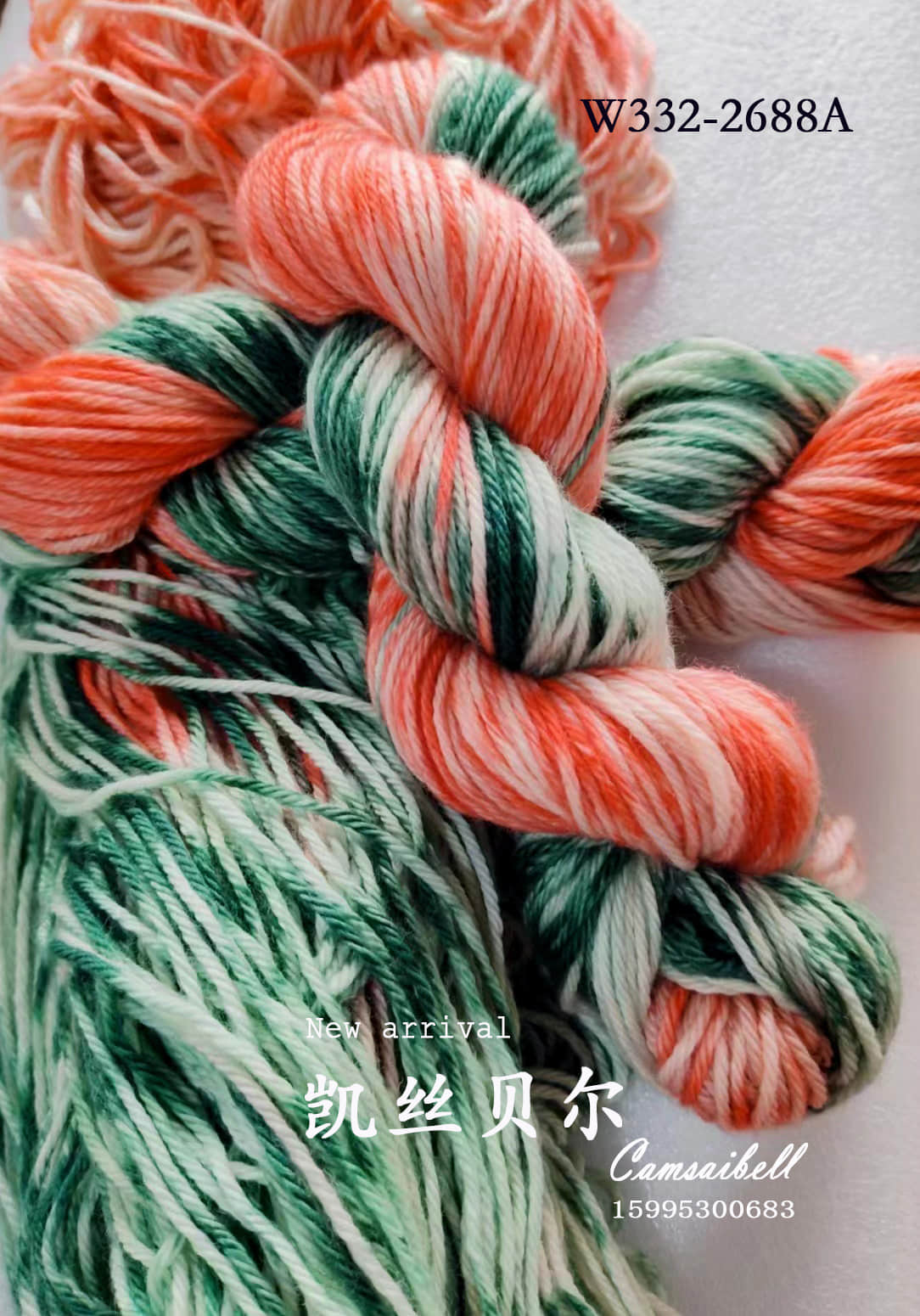
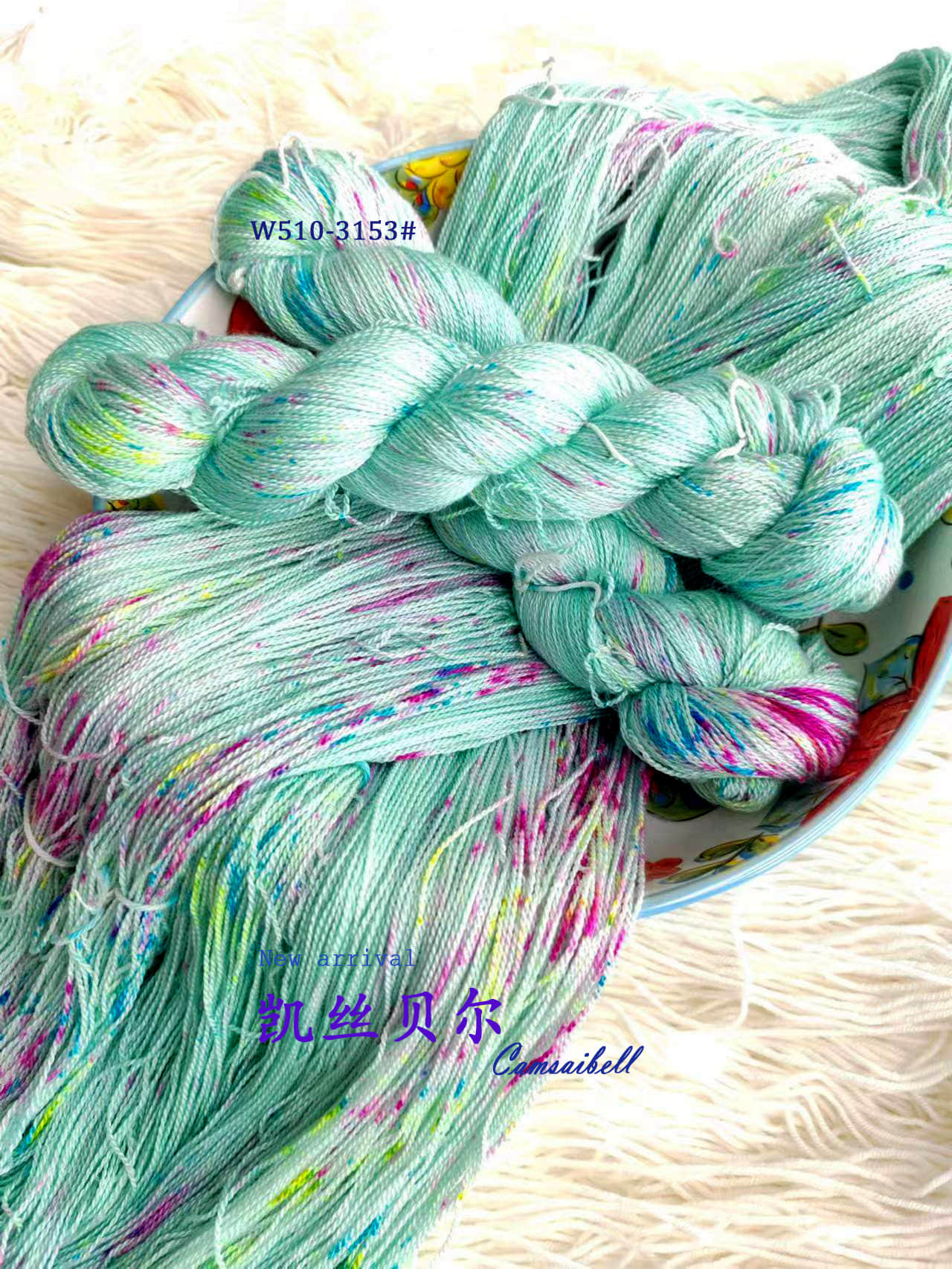
Hand-dyed yarn is coloured using a hands-on process in which the dyer controls how the dye is mixed, applied, absorbed and developed. Depending on the technique used, the finished skein may feature subtle tonal shifts, contrasting colour sections, speckles, gradients or several shades that blend into one another. Rather than aiming for identical colour distribution across thousands of units, many artisan dyers intentionally create colourways with individual character. This makes hand-dyed yarn particularly appealing to knitters and crocheters who want their finished garments, shawls, socks and accessories to have a distinctive appearance.
By comparison, commercially dyed yarn is often manufactured in larger batches using standardised equipment and tightly controlled recipes. Industrial production can spread labour, machinery, testing and overheads across a high volume of yarn, making the cost per skein more economical. Large-scale dyeing is not necessarily less sophisticated; commercial mills may have excellent colour consistency and advanced process controls. The main difference lies in the production model. Hand-dyed yarn often prioritises small-batch creativity and close attention to individual batches, whereas mass production generally prioritises repeatability, output and cost efficiency.
The Main Reasons Hand-Dyed Yarn Costs More
- Quality and composition of the yarn base
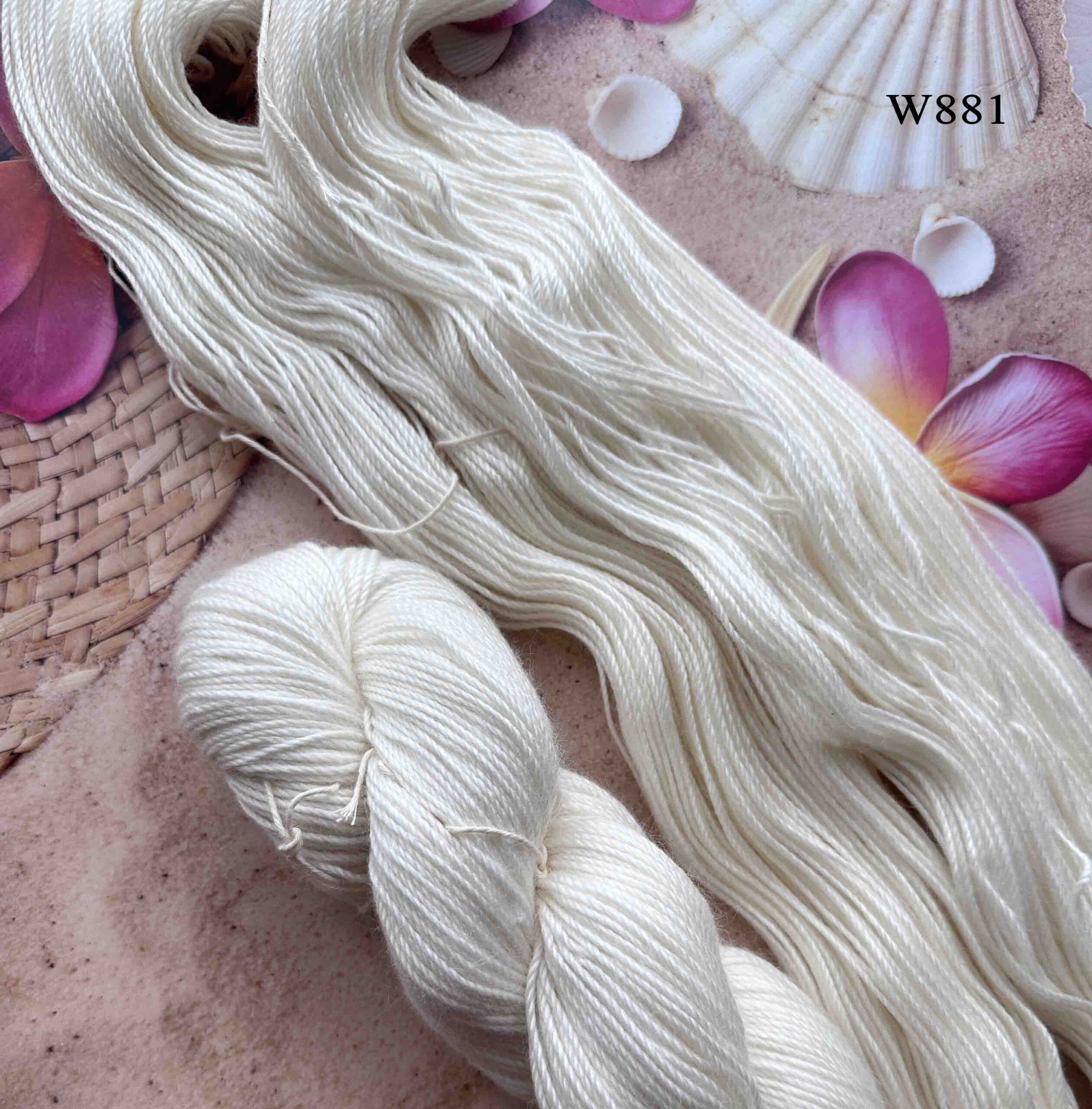
The dyeing process begins with undyed yarn, which is often referred to as the ‘yarn base’. The price of the yarn base depends on the fibre content, spinning method, construction, supplier, and traceability. Merino wool, alpaca, silk and premium blends tend to be more expensive than basic acrylic or standard wool blends due to the characteristics of the raw materials and the processing requirements. For example, a soft merino and silk blend is not directly comparable with basic acrylic yarn simply because they are both sold in similar-sized skeins.
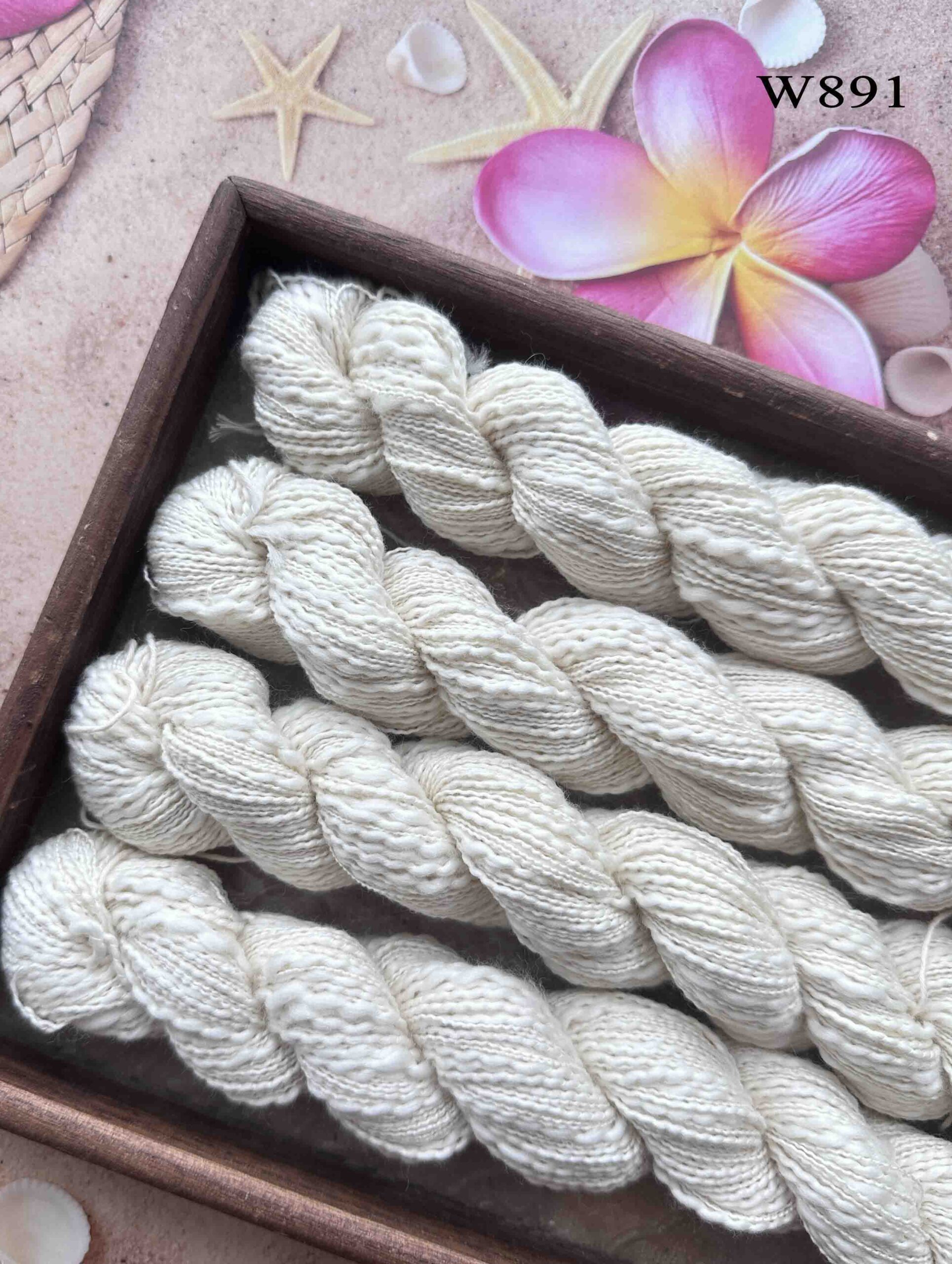
Yarn construction also affects cost and the final appearance. Single-ply yarns, tightly plied sock yarns and lofty woolen-spun yarns absorb and display colour differently. Dyers must understand the base they are working with because fibre composition influences dye compatibility, while twist and structure influence how colour appears on the surface. Some dyers purchase professionally spun, undyed yarn from specialist mills, meaning that the costs of spinning, fibre preparation and supply-chain handling are already built into the product before dyeing begins.
- Manual dyeing requires time at multiple stages
Visible colour is only one part of the work. A dyer may need to prepare the skeins, weigh the dye materials, mix the colours individually, wet the yarn, apply the dye in a controlled sequence, manage the heat and other settings, rinse away the excess dye, and allow the skeins to dry fully. Depending on the technique and batch size, this process may involve repeated handling and close observation rather than a single, uninterrupted production step.
Complex colourways can demand additional preparation. For example, a speckled yarn may require the careful placement of small amounts of dye, while a multicoloured skein may involve separate applications to achieve the desired balance between contrasting and blended shades. The dyer must also consider how colours behave during setting and rinsing. These tasks require practical experience, and time spent correcting uneven results or checking colour quality is part of the production cost.
- Small production batches limit economies of scale
A small, independent dye studio may produce a limited number of skeins in one batch, whereas a commercial mill can process much larger quantities using specialised equipment. When production volume is low, fixed expenses such as workspace, equipment, utilities, maintenance and administration are divided across fewer units. Smaller orders of undyed yarn, dye supplies, labels and packaging may also incur higher unit costs than bulk purchasing.
Batch size also influences how efficiently time is used. Tasks such as preparing a dye pot, setting up the workspace, cleaning equipment and documenting a recipe all take time, regardless of whether the dyer produces ten or fifty skeins. Larger batches can spread these tasks across more units, but very large batches may exceed the capacity of a studio’s equipment or compromise the desired colour effect. Therefore, the higher price of hand-dyed yarn often reflects the economics of small-scale production rather than simply a premium added because the product is handmade.
- Color design is a skilled creative process
A distinctive hand-dyed colorway is rarely just a matter of choosing a dye color and applying it. The dyer must decide how colors interact, how much contrast to create, and how the yarn will look when knitted or crocheted into fabric. A skein that appears dramatic in a hank may produce a different visual effect once worked into stitches, where color repeats, stitch size, and project dimensions influence the finished result.
Experience matters because dyeing is both a technical process and a design discipline. Dyers develop recipes, test combinations, evaluate samples, and refine methods to achieve a repeatable visual direction. Not every experiment produces a sellable colorway, and some batches may differ from the intended result. Those development costs are part of maintaining a collection of commercially usable colors. Buyers are therefore paying not only for materials and processing, but also for the design decisions and accumulated expertise behind the finished yarn.
- Washing, drying, and finishing add hidden costs
After dyeing, the yarn may require careful rinsing to remove any residual dye or processing chemicals. The appropriate treatment depends on the fibre and dye system used, but the objective is always to achieve the intended shade while maintaining acceptable colourfastness and avoiding unnecessary damage to the yarn. Woolmark’s technical resources emphasise that dye selection, temperature, pH, shade uniformity and fastness are all important factors to consider when dyeing wool. These requirements explain why the process involves more than simply adding colour to a skein.
Once the yarn has been washed and dried, it may need to be untangled, rewound into a skein, inspected, weighed and labelled. These finishing steps can be labour-intensive, particularly when the yarn must be handled individually. The dyer must also check for obvious defects, take product photographs, update inventory records, package orders and respond to customer enquiries. While these activities are less visible to buyers than the finished colour, they contribute to the price of a small-batch product.
- Dye lots, quality control, and unsellable batches
Hand-dyed yarn is not always identical from one batch to the next. Differences in application, yarn absorption, temperature, and processing conditions can influence the final appearance, even when the dyer follows the same recipe. Skilled dyers work to control these variables, but subtle variation may remain. For many customers, this variation is part of the appeal; for the dyer, however, it creates a need for careful batch tracking and quality control.
Not every batch will meet the intended commercial standard. A color may turn out too dark, too pale, or visually different from the original sample. Some yarn may be suitable for sale as a discounted colorway, while other material may require reworking or be unsuitable for the intended product. These outcomes create costs that must be absorbed across successful sales. This is one reason a small studio cannot always price its yarn by adding only the cost of the undyed skein and a small amount for dye.
- Packaging, distribution, and small-business overhead
Running a hand-dyed yarn business requires more than just dyes and a workspace. Operating expenses may include equipment, utilities, rent, insurance, website hosting, payment processing fees, product photography, market stalls, shipping materials, and customer service. As independent dyers often manage several of these responsibilities themselves, the selling price must contribute to both production costs and the broader expenses of running the business.
Retail channels also influence the final price. Yarn sold directly by a dyer may have a different cost structure to yarn sold through a specialist shop, where wholesale pricing, retailer margins and distribution expenses may apply. Consequently, two skeins with similar fibre content and appearance may have different prices, without either seller necessarily making an unusually high profit. To make a fair comparison, the entire journey from raw material to customer must be considered, not just the dyeing step.
What Actually Determines the Price of Hand-Dyed Yarn?
The price of hand-dyed yarn depends on several interacting factors. Fiber content, yarn weight, dyeing complexity, batch size, finishing requirements, and the seller’s operating model can all affect the final cost. A 100 g skein of a premium merino-silk blend with a complex multicolor design should not be compared directly with a 50 g skein of a simpler wool blend.
The following table summarizes the principal cost drivers and how they influence the product.
| Cost factor | What affects the cost | What buyers should check |
| Yarn base | Fiber type, spinning quality, blend composition, and sourcing | Fiber percentages, yarn weight, and yardage |
| Dyeing labor | Number of color applications, preparation, monitoring, and rinsing | Whether the colorway is tonal, speckled, variegated, or multicolored |
| Production scale | Batch size, supply purchasing, and equipment capacity | Whether the yarn is produced in small batches or at industrial scale |
| Quality control | Shade inspection, consistency checks, and handling of imperfect batches | Colorfastness guidance and dye-lot information |
| Finishing and packaging | Drying, skeining, labeling, and order preparation | Net weight, presentation, and packaging details |
| Business overhead | Workspace, equipment, fees, marketing, and distribution | Seller transparency, service, and product specifications |
Important distinction: a high price does not automatically mean better yarn. A premium price is most defensible when the product combines suitable fiber quality, well-executed dyeing, reliable finishing, and a color design that meets the buyer’s needs.
Hand-Dyed Yarn vs. Commercially Dyed Yarn
Neither hand-dyed yarn nor commercially dyed yarn is universally better. Each serves different priorities, and the right choice depends on the project, budget, desired appearance, and the importance of matching multiple skeins.
| Comparison point | Hand-dyed yarn | Commercially dyed yarn |
| Color appearance | Often features tonal variation, speckles, or complex color transitions | Often offers consistent solid colors and standardized colorways |
| Production volume | Frequently produced in smaller batches | Often produced in larger batches |
| Price structure | Higher labor and smaller-scale production costs may increase the price | Economies of scale can reduce the unit cost |
| Shade matching | Batch variation may be more noticeable | Standardized processes can support more consistent matching |
| Design flexibility | Often suited to distinctive, artistic color effects | Often suited to repeatable colors and large-volume requirements |
| Availability | Popular colorways may sell out between production runs | Established colors may be replenished more consistently |
| Best use cases | Statement shawls, special garments, accessories, and color-focused projects | Everyday garments, large projects, uniforms, and budget-conscious knitting |
For a sweater that requires several skeins, consistent color matters as much as the attractiveness of the individual skein. Hand-dyed yarn can produce a beautiful result, but buyers should check whether the skeins come from the same dye lot and consider alternating skeins during knitting if visible differences occur. Commercially dyed yarn may be a more practical choice when exact shade consistency, large quantities, or easy replenishment is the priority.
Is Hand-Dyed Yarn Worth the Higher Price?
Hand-dyed yarn can be worth the extra expense if its colour, fibre, and character are important for the finished project. For example, a shawl designed to showcase colour transitions may benefit substantially from a carefully developed variegated yarn. Similarly, a small handmade gift may warrant a premium skein if the recipient appreciates artisan materials and a distinctive colour palette. In these cases, the yarn contributes not only to the structure and warmth of the project, but also to its visual identity.
However, a premium yarn is not necessary for every project. Basic household items, practice swatches, frequently washed garments, and large blankets are better suited to a more affordable yarn that is durable and easy to care for. Even experienced knitters often combine hand-dyed and commercial yarns to control costs while achieving a distinctive finish. The sensible question is not whether expensive yarn is always superior, but whether its particular qualities justify the additional cost for the intended use.
How to evaluate value before buying?
Use the following checklist to make a more meaningful comparison:
- Compare cost per usable length. Look at price per meter or yard rather than comparing skein prices alone. A larger skein may offer better value even if its sticker price is higher.
- Read the fiber composition. Check whether the yarn contains wool, silk, alpaca, nylon, or other fibers, and consider how that blend suits the project.
- Inspect the colorway. Determine whether the yarn is tonal, speckled, gradient, or highly variegated. Color effects that look attractive in a skein may behave differently when knitted.
- Check the care instructions. A hand-dyed yarn may require gentle washing or other specific care depending on its fiber content and finishing.
- Buy enough yarn from the same batch. For projects requiring several skeins, ordering the full quantity together reduces the risk of noticeable differences between dye lots.
- Assess the seller’s information. Clear details about weight, yardage, fiber composition, dye-lot variation, and care are more useful than premium branding alone.
These checks help distinguish a genuinely suitable product from one whose price is driven mainly by presentation or scarcity.
Does Hand-Dyed Yarn Have Better Quality or Sustainability?
Hand-dyed yarn is not necessarily higher quality or more sustainable than commercially dyed yarn. The quality of the yarn depends on factors such as the base yarn, dye compatibility, processing controls, colourfastness, and finishing. While an industrial mill can produce yarn with excellent consistency and performance, a skilled dyer can also produce excellent yarn in a small studio. Similarly, an attractive colourway does not guarantee that a yarn will resist pilling, retain its shape or withstand repeated washing.
Sustainability requires evidence rather than assumptions based on the term ‘handmade’. Relevant factors include the origin and processing of the fibre, dye chemistry, water and energy consumption, wastewater management, packaging and production waste. While smaller batches can reduce the need for large inventories of finished colourways, hand-dyeing can still use substantial amounts of water or energy, depending on the method. Woolmark’s dyeing education materials specifically address the environmental effects associated with textile dyeing, illustrating why the entire process is important.
Buyers who care about environmental performance should look for specific, verifiable information on fibre sourcing, recognised certifications where applicable, dye and wastewater practices, and product care recommendations that support a longer useful life. A transparent supplier with clear evidence is a better choice than one that relies on the broad claim that artisan production is inherently eco-friendly.
How to Make Hand-Dyed Yarn More Affordable?
You don’t need to use premium yarn for an entire project to enjoy its visual appeal. One practical approach is to combine a hand-dyed skein with a complementary solid-colour yarn. For instance, you could use a hand-dyed yarn for accents such as cuffs, borders, stripes, shawl sections or colourwork, while a more affordable yarn could be used for the bulk of the project. This approach maintains the distinctive colour effect without requiring every metre to come from a premium source.
Another option is to select simpler colourways. A tonal hand-dyed yarn may be easier to apply than a highly speckled or multicoloured design, although prices actually vary by dyer and base yarn. Buying a complete project quantity in advance can also help to avoid the inconvenience of trying to find a matching batch later on. Finally, swatching before committing to a large project reveals how the yarn’s colours, texture and stitch definition will behave, reducing the risk of spending more on a yarn that does not suit the intended design.
Hand-Dyed Yarn FAQs
- Why is hand-dyed yarn more expensive than regular yarn?
Hand-dyed yarn often costs more because it requires skilled manual work, small-batch production, and individual finishing. Premium fiber bases and complex color designs can increase the price further.
- Is hand-dyed yarn better quality?
Not necessarily, because quality depends on the fiber, spinning, dyeing, and finishing rather than the dyeing method alone. Hand-dyed yarn may offer more distinctive colors, while commercially dyed yarn can provide excellent consistency and durability.
- Why does hand-dyed yarn vary in color between skeins?
Small differences in dye application, absorption, and processing can cause skeins from the same colorway to look slightly different. Buying skeins from the same dye lot and alternating them while knitting can help blend visible variations.
- Is hand-dyed yarn worth the money?
It can be worth the extra cost when distinctive color, artisan design, or a particular fiber blend is important to the project. For everyday items or large projects with tight budgets, a suitable commercially dyed yarn may offer better value.
- Does hand-dyed yarn fade or bleed?
Hand-dyed yarn can release excess dye or fade if the dyeing process, fiber, or care conditions affect colorfastness. Follow the seller’s washing instructions and test a small swatch when you are concerned about bleeding, especially with highly saturated colors.
- How can I buy hand-dyed yarn without spending too much?
Compare the price per yard or meter, choose a fiber blend that fits your project, and consider using hand-dyed yarn as an accent with a more affordable solid yarn. Buying the full quantity from one dye lot can also help prevent costly mismatches later.
Conclusión
The price of hand-dyed yarn reflects several layers of value, including the cost of the undyed fibre, skilled colour development, hands-on dyeing, small production runs, quality checks, finishing and business overheads. The defining advantage of hand-dyed yarn is often its distinctive colourways rather than any universal improvement in strength, softness or durability. Commercially dyed yarn remains a good option for projects requiring consistent shades, large quantities or lower costs.
The best buying decision is to match the yarn to the project. Compare fibre content, yardage, care requirements, colour behaviour and dye-lot availability before deciding whether a premium skein is worthwhile. When the appearance and material qualities of the yarn serve a clear purpose, it can be a meaningful investment in the finished piece. However, when they do not, a well-made commercial alternative may be the more practical choice.

 Spanish
  English
  Russian
  Japanese
  Korean
  French
  German