
The main differences between sock yarn and DK yarn are the thickness of the yarn, the knitting gauge, the fabric density, the typical applications, and the performance characteristics they are designed to deliver. Sock yarn is generally finer, is often blended with nylon for durability, and is used for socks, lightweight garments, and accessories. In contrast, DK yarn is thicker, produces a fuller fabric, and is commonly used for sweaters, hats, scarves, baby garments, and blankets. According to the Craft Yarn Council’s Standard Yarn Weight System, sock yarn is categorised as Super Fine (Category 1), while DK yarn falls into Light (Category 3). However, actual yarn construction and gauge can vary by manufacturer.
What Are Sock Yarn and DK Yarn?
What Is Sock Yarn?
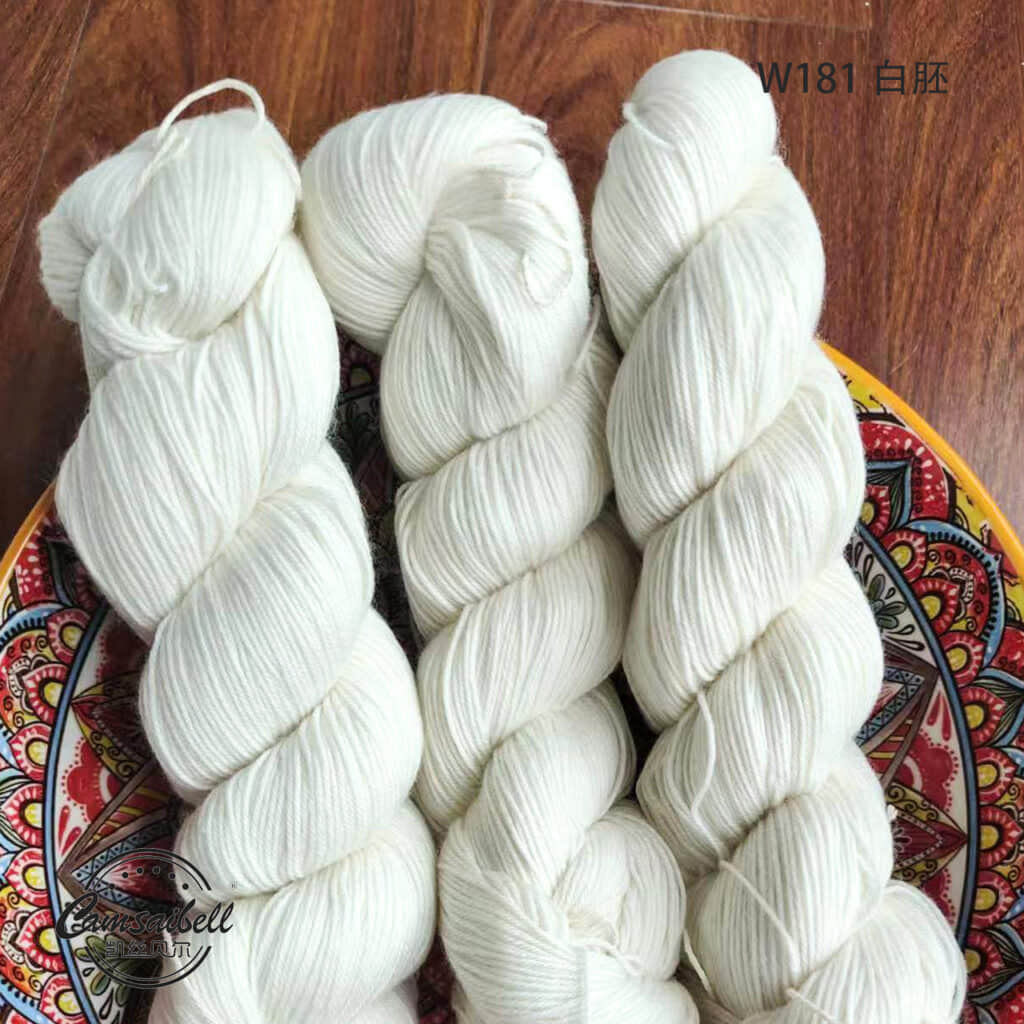
Fil pour chaussettes is a fine-weight yarn designed to produce lightweight, flexible knitted or crocheted fabrics, particularly for socks and other garments that benefit from fine stitches and a comfortable fit.
It is commonly associated with fingering-weight yarn, which is sometimes described as 4-ply in certain markets, although the terminology is not consistent across regions and manufacturers. Most commercially available sock yarns are made from wool, merino wool, cotton, acrylic, or blended fibres. Wool and nylon combinations are particularly popular for knitted socks due to their elasticity, warmth, moisture management, and softness. The wool component provides warmth, moisture management, and softness, while nylon improves abrasion resistance in areas that experience repeated friction, such as the heels and toes. However, not all sock yarn contains nylon, and the suitability of a particular yarn for socks depends on its fibre composition, construction, twist and finishing.
Sock yarn is also widely used for other projects besides traditional socks. Its relatively fine diameter makes it suitable for lightweight shawls, fitted garments, baby clothing, lace accessories, colourwork projects and detailed knitting patterns where stitch definition and a relatively lightweight fabric are important. As fine yarns require more stitches and rows to achieve a given finished size, projects made with sock yarn often take more time to complete than those made with thicker yarns.
What Is DK Yarn?
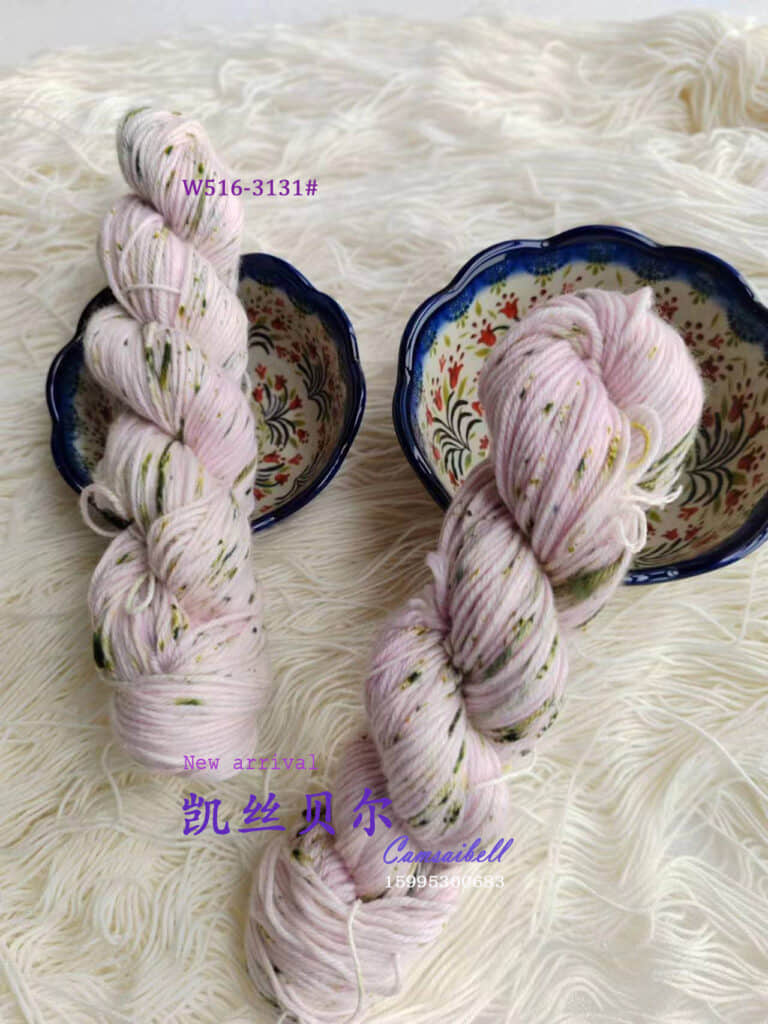
DK (Double Knitting) yarn is a lightweight yarn commonly used to create balanced, medium-weight knitted fabrics with a combination of softness, warmth, and structure. It allows for relatively efficient project progress.
It is classified as Category 3, Light, in the Craft Yarn Council’s Standard Yarn Weight System. It is generally thicker than sock or fingering weight yarn, making it ideal for garments and accessories requiring more fabric volume without becoming bulky. Common materials used to make DK yarn include merino wool, lambswool, cotton, acrylic, alpaca, bamboo, and mixed-fibre compositions. Each of these materials offers different characteristics in terms of drape, warmth, breathability, softness, and durability.
DK yarn is particularly popular for sweaters, cardigans, hats, scarves, baby blankets, mittens and textured knitting projects. Its thickness enables knitted fabric to be produced more quickly than with fine sock yarn, while still maintaining a relatively refined appearance compared to worsted or bulky yarn. It is also frequently used in colourwork, cables, ribbing and stitch pattern projects because it strikes a useful balance between stitch visibility, garment weight and fabric density.
Sock Yarn vs. DK Yarn: Key Differences
Although sock yarn and DK yarn may sometimes appear similar when viewed on a yarn shelf, they are designed around different thickness ranges and fabric requirements. Sock yarn generally produces finer, lighter knitted fabric, whereas DK yarn creates a thicker fabric with more coverage and insulation per stitch. The differences become especially important when choosing yarn for a pattern, estimating material consumption, selecting needles, or determining the finished garment’s comfort and durability.
| Comparison Factor | Fil pour chaussettes | DK Yarn |
| Yarn weight category | Usually Category 1, Super Fine | Category 3, Light |
| Typical thickness | Fine and lightweight | Medium-light and thicker |
| Typical knitting gauge | Approximately 27–32 stitches per 4 inches | Approximately 21–24 stitches per 4 inches |
| Common needle size | 2.25–3.25 mm (US 1–3) | 3.75–4.5 mm (US 5–7) |
| Common fiber materials | Wool, merino, nylon blends, cotton, acrylic | Wool, cotton, acrylic, alpaca, bamboo, blends |
| Fabric characteristics | Fine, lightweight, flexible, often relatively dense when knitted tightly | Fuller, thicker, generally warmer, and more substantial |
| Typical projects | Socks, lightweight shawls, fine garments, lace, colorwork | Sweaters, hats, scarves, baby clothes, blankets |
| Knitting speed | Usually slower because more stitches and rows are needed | Generally faster for comparable garment dimensions |
| Common sock-specific blends | Wool blended with nylon or other reinforcing fibers | Fiber blends vary; not necessarily designed for sock abrasion |
Gauge and needle sizes are industry guideline ranges, not absolute specifications. The actual gauge depends on yarn construction, knitting technique, needle size, stitch pattern, and individual tension. Reference: Craft Yarn Council Standard Yarn Weight System.
Yarn Thickness and Weight
The most fundamental difference between sock yarn and DK yarn is their thickness. Sock yarn is generally thinner, enabling knitters to produce finer stitches and more intricate patterns, as well as lightweight fabric. This thinner structure is particularly advantageous for socks, as it helps to create footwear that fits comfortably inside shoes without being too bulky. Sock yarn is also ideal for intricate colourwork, small-scale motifs, lace patterns and fine ribbing.
In contrast, DK yarn has a larger diameter and usually creates thicker knitted fabric with greater coverage per stitch. This makes it a practical option for garments intended to provide warmth and structure, such as jumpers, winter accessories and children’s clothing. However, the final fabric’s warmth, softness, and drape are influenced by more than just yarn thickness; fibre type, stitch structure, density, and finishing methods also play a role.
Knitting Gauge and Needle Size
Sock yarn and DK yarn generally require different knitting needle sizes because their diameters influence stitch formation and fabric density. Sock yarn is typically knitted using smaller needles, often between 2.25 mm and 3.25 mm, to create a fabric that is sufficiently compact for socks and lightweight accessories. A tighter gauge can reduce excessive gaps between stitches, which may be desirable in socks, although the ideal gauge depends on the pattern, yarn, and intended fit.
DK yarn is typically knitted using needles around 3.75 mm to 4.5 mm. The larger needle size accommodates its thicker strand and allows the fabric to maintain a balanced structure without becoming excessively stiff. For garments, knitters should always make a gauge swatch before starting because even a small difference in stitch count can affect garment measurements, shaping, fit, and material consumption.
Fabric Density, Warmth, and Texture
Although sock yarn typically produces a finer fabric, it does not automatically create a cooler or less insulating garment. Dense-gauge knitting with wool sock yarn can provide substantial warmth, while loose-gauge knitting with cotton sock yarn can produce a relatively breathable fabric. The yarn’s fibre composition, stitch structure, air pockets and finishing treatments all affect thermal performance and moisture behaviour.
DK yarn generally creates a thicker fabric, particularly when knitted at the recommended gauge. This makes it ideal for cold-weather garments and accessories where coverage, insulation and texture are important. Cable stitches, ribbing, seed stitch, and other textured patterns often stand out clearly in DK yarn because the thicker strand makes stitch structures more visible without necessarily requiring oversized needles.
Durability and Wear Resistance
Sock yarn is frequently formulated with durability in mind because socks experience continuous friction from shoes, walking, movement, washing, and repeated stretching. Many sock yarns use wool blended with nylon or polyamide to strengthen the yarn and improve its resistance to abrasion. Some manufacturers also use tightly twisted yarn constructions, reinforced heel-and-toe formulations, or specialized fiber treatments to improve performance.
DK yarn is not inherently less durable than sock yarn, but its durability is usually evaluated in relation to its intended application. A DK yarn made from strong wool, acrylic, cotton, or a carefully engineered blend may perform well in frequently worn garments. However, a standard DK yarn without reinforcement may not be the best choice for socks that experience intensive friction. When selecting yarn for high-wear applications, fiber composition, twist, abrasion resistance, washing requirements, and the finished fabric’s structure should be considered rather than weight category alone.
What Are the Typical Applications of Sock Yarn and DK Yarn?
The choice between sock yarn and DK yarn is largely determined by the intended product, the desired fabric properties, and the balance between comfort, appearance, durability, and production time. While both yarns can be used for a wide range of knitting and crochet projects, their thickness and construction make them more suitable for particular applications.
Common Applications of Sock Yarn
Sock yarn is ideal for projects requiring a lightweight fabric, fine stitch structure, flexibility, or a close-fitting design. Its relatively small diameter makes it possible to create detailed patterns and garments with less bulk, which is why it is a popular option for hand and machine knitting.
Typical sock yarn applications include:
- Knitted socks: Sock yarn, especially wool-nylon blends, is widely used for everyday socks because it can combine elasticity, comfort, and abrasion resistance.
- Lightweight sweaters and cardigans: Fine yarn is suitable for garments that require a lightweight fabric, layering capability, and relatively refined stitch appearance.
- Shawls and scarves: Sock yarn supports detailed lace patterns, color transitions, stripes, and lightweight accessories.
- Baby clothing: Soft sock-weight yarns are frequently used for lightweight baby garments, although fiber softness, washing requirements, and skin sensitivity should be considered.
- Colorwork and patterned knitting: The finer yarn structure allows intricate motifs, small stitches, and detailed decorative patterns to be developed without excessive fabric bulk.
Sock yarn is also commonly selected for projects that require a relatively large number of stitches to achieve a smooth, flexible, or detailed fabric. Its versatility extends well beyond socks, making it a practical yarn category for knitters who value fine texture and lightweight construction.
Common Applications of DK Yarn
DK yarn is frequently chosen for projects that need more fabric coverage, moderate warmth, visible stitch definition, and a relatively efficient knitting process. Its thickness makes it easier to produce garments and accessories with substantial texture while maintaining a manageable finished weight.
Common DK yarn applications include:
- Sweaters and cardigans: DK yarn is widely used for everyday knitwear, offering a balance between warmth, fabric weight, and garment structure.
- Hats and beanies: Its thickness helps produce comfortable winter accessories with good coverage and relatively quick construction.
- Foulards et châles : DK yarn is suitable for both simple and textured accessories, including ribbing, cables, and decorative stitches.
- Baby blankets and children’s clothing: Many DK yarns provide an appropriate balance between softness, thickness, and ease of care.
- Mittens and gloves: DK yarn can produce thicker handwear with more coverage than fine sock yarn, depending on the knitting gauge and fiber composition.
- Textured and colorwork garments: Its relatively larger stitches can help make cables, textured patterns, and color combinations more visually prominent.
DK yarn is especially practical for knitters who want to complete garments and accessories more efficiently without moving into heavier yarn categories. It offers flexibility for a broad range of garment constructions and knitting techniques.
Can Sock Yarn and DK Yarn Be Substituted for Each Other?
Although sock yarn and DK yarn can sometimes be substituted for each other, they are not direct replacements as they differ in terms of thickness, gauge, fabric weight, and material requirements.
Using DK yarn instead of sock yarn will generally produce a thicker fabric, fewer stitches per inch, and a larger finished garment if the original pattern is followed without adjustment. For a fitted sock pattern, for example, this difference can significantly affect the fit of the shoe, foot circumference, elasticity, and comfort. DK yarn may be suitable for thicker socks designed for boots or for wearing in cold weather, but the pattern should be adapted specifically for the heavier yarn rather than simply substituting it.
Using sock yarn instead of DK yarn usually creates a finer fabric and may reduce the thickness and warmth of the finished garment. A jumper designed for DK yarn may require substantially more stitches and rows when knitted with sock yarn, which could affect the garment’s proportions, construction and material usage. In some cases, holding two strands of sock yarn together can create a yarn of a similar thickness, but the resulting fabric will depend on the fibre composition, strand arrangement, knitting tension and needle size.
When substituting yarn, knitters should consider the following factors:
- Check the gauge: Knit a swatch using the actual yarn, needles, and stitch pattern to determine whether the finished fabric matches the original pattern’s gauge.
- Evaluate fabric properties: Assess the fabric’s thickness, elasticity, drape, warmth, softness, and stitch definition before committing to the project.
- Recalculate yarn requirements: Different yarn weights and gauge combinations can change the total yarn consumption, even when the finished garment dimensions remain the same.
- Adjust garment dimensions: If the substitute yarn produces a different gauge, stitch counts, shaping, and row counts may need to be recalculated.
- Consider washing and finishing: Yarn fiber and finishing treatments influence shrinkage, stretching, texture, and the final appearance after laundering.
For projects where fit is critical, such as socks, fitted sweaters, or garments with complex shaping, following the recommended yarn weight and gauge is generally the most reliable approach.
How to Choose Between Sock Yarn and DK Yarn?
Choosing between sock yarn and DK yarn requires more than comparing yarn labels. The best yarn depends on the project’s intended function, the finished fabric’s performance, the knitting technique, and the wearer’s preferences. A yarn that works well for lightweight socks may not be ideal for a warm sweater, while DK yarn may provide better coverage for a blanket or winter accessory.
| Project Requirement | Recommended Yarn | Selection Considerations |
| Everyday knitted socks | Fil pour chaussettes | Look for wool-nylon blends, abrasion resistance, elasticity, and suitable washing instructions. |
| Lightweight summer garments | Fil pour chaussettes | Consider cotton, linen blends, lightweight wool, or breathable fiber combinations. |
| Fine lace shawls | Fil pour chaussettes | Choose yarn with appropriate softness, drape, and stitch definition |
| Warm sweaters | Fil DK | Consider wool, merino, alpaca, or suitable blends for insulation and garment structure. |
| Winter hats and scarves | Fil DK | Look for warmth, softness, texture, and ease of maintenance |
| Baby garments and blankets | Sock yarn or DK yarn | Choose soft fibers, practical washing requirements, and appropriate fabric density. |
| Textured knitting projects | Fil DK | Consider stitch definition, yarn twist, and the visibility of cables or textured patterns. |
| Thick winter socks | DK yarn or specialized thicker sock yarn | Ensure the pattern accommodates the thicker yarn and intended footwear |
| Detailed colorwork | Sock yarn or DK yarn | Choose according to motif scale, gauge, fabric weight, and desired finish |
Practical Buying Considerations
When purchasing sock yarn or DK yarn for a knitting project, buyers should pay attention to the following product specifications:
- Fiber composition: Wool, merino, cotton, acrylic, alpaca, nylon, and blended fibers offer different characteristics in elasticity, warmth, softness, durability, and care requirements.
- Yarn construction: Single-ply, plied, twisted, and reinforced yarn constructions can affect stitch definition, abrasion resistance, fabric stability, and texture.
- Yardage and weight: Compare the meterage per ball or skein instead of relying exclusively on the yarn weight name. Different fiber compositions and constructions may produce different yardage even when the yarn is sold under the same category.
- Color and dyeing: Solid, tonal, variegated, self-striping, and hand-dyed yarns can produce different visual effects depending on the stitch pattern and yarn thickness.
- Care instructions: Machine-washable, hand-wash-only, superwash-treated, and untreated fibers may require different maintenance routines.
- Pattern compatibility: Check the recommended yarn weight, gauge, needle size, fiber composition, and estimated yarn quantity before purchasing.
Understanding these factors helps knitters select materials that are more likely to deliver the desired finished appearance, performance, and project experience.
Frequently Asked Questions About Sock Yarn and DK Yarn
Q1: Is sock yarn thinner than DK yarn?
Yes. Sock yarn is generally finer than DK yarn and is typically classified as Super Fine, while DK yarn belongs to the Light category. This difference affects knitting gauge, fabric thickness, and the number of stitches required.
Q2: Can DK yarn be used to knit socks?
Yes, DK yarn can be used for socks, particularly thicker socks designed for winter wear or boots. However, the pattern must accommodate the thicker yarn to ensure proper fit and comfort.
Q3: Is sock yarn the same as fingering-weight yarn?
Sock yarn and fingering-weight yarn are often used interchangeably, as both generally refer to fine yarns in the Super Fine category. However, sock yarn may include specific fiber blends or constructions intended to improve durability and wear resistance.
Q4: What needle size is recommended for sock yarn and DK yarn?
Sock yarn is commonly knitted using 2.25–3.25 mm needles, while DK yarn generally uses 3.75–4.5 mm needles. The appropriate needle size depends on the pattern, yarn construction, and the gauge required for the finished project.
Q5: Is DK yarn warmer than sock yarn?
DK yarn generally produces thicker fabric and may provide greater insulation when knitted at comparable fabric densities and with similar fibers. However, warmth also depends on fiber composition, stitch structure, fabric density, and how much air the knitted fabric traps.
Q6: Can I use two strands of sock yarn instead of DK yarn?
Holding two strands of sock yarn together can sometimes create a fabric similar in thickness to a heavier yarn, but the result is not necessarily equivalent to DK yarn. Knitters should test gauge, fabric texture, needle size, and yarn consumption before using this substitution.
Conclusion
The main differences between sock yarn and DK yarn are their thickness, knitting gauge, fabric characteristics, durability requirements, and typical project applications. Sock yarn is generally finer and is often used for lightweight garments, socks, detailed patterns, and flexible fabrics, whereas DK yarn is thicker and is commonly used for sweaters, hats, scarves, baby clothing, blankets, and textured knitting projects. While both categories of yarn are versatile and can sometimes be interchanged, it is important to carefully evaluate their differences in gauge, fabric density, and material performance before starting a project.
Understanding the characteristics of sock and DK yarn makes it easier for knitters, designers, yarn manufacturers, and textile buyers to select suitable materials, improve project outcomes, and match yarn specifications with the intended application. Rather than relying exclusively on yarn weight labels, the most effective selection process considers fibre composition, yarn construction, gauge, durability, washing requirements, and the functional and aesthetic requirements of the finished fabric.

 French
 English
 Russian
 Japanese
 Korean
 Spanish
 German