
Cashmere slub yarn is ideal for making lightweight sweaters, textured cardigans, scarves, shawls, and other premium fashion accessories that benefit from an irregular, natural surface rather than a completely smooth finish. Combining the softness and insulating properties of cashmere with the thick-and-thin structure of slub yarn creates subtle texture and visual depth for a relaxed appearance. Research published in Fibres in 2026 emphasises the importance of cashmere fibre preparation and spinning control in achieving consistent yarn quality. Meanwhile, textile research on slub yarn confirms that slub dimensions and distribution affect both fabric appearance and mechanical performance.
The value of cashmere slub yarn lies not only in its uneven appearance. Its distinctive structure enables designers to create surface character without relying entirely on complex knitting patterns, prints, or additional finishing treatments. However, the appropriate yarn specification depends on the intended product, the proportion of cashmere, the slub profile, and the desired levels of softness, strength, and fabric stability.
What Is Cashmere Slub Yarn?
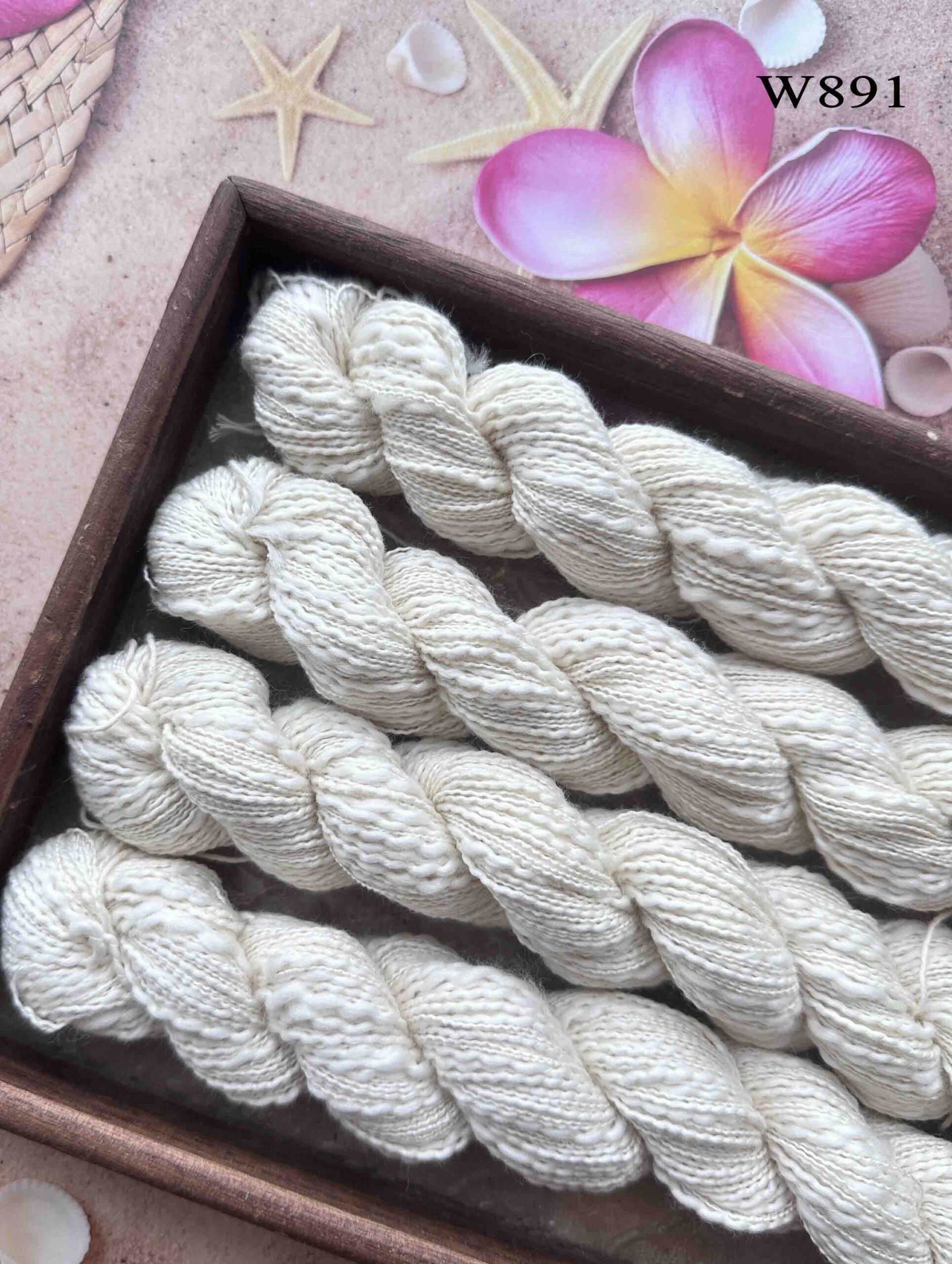
Кашемировая нить с эффектом слюбы is a textured yarn made from cashmere fibres, either on their own or blended with other fibres. Thick sections are deliberately distributed along the yarn. Unlike conventional yarn, which is spun to maintain a consistent diameter and linear density, slub yarn contains thicker areas, known as ‘slubs’, which are separated by thinner sections called the ‘base yarn’. These variations may be irregular or follow a planned repeat pattern, depending on the spinning method and the desired appearance of the fabric.
Cashmere is valued for its fine, soft undercoat fibres, lightweight warmth and comfortable texture. The fibre is obtained from the undercoat of cashmere goats and separated from coarser guard hairs during processing. The Council of Fashion Designers of America (CFDA) describes cashmere as a lightweight, natural fibre that is soft, insulating and highly absorbent.
When cashmere is made into slub yarn, its natural qualities are combined with an intentionally varied yarn structure. The thicker sections create small raised areas or subtle irregularities in the finished textile, while the thinner sections provide contrast and ensure the fabric remains relatively lightweight. Depending on the yarn construction and the method of knitting or weaving, the result can range from an understated surface texture to a more pronounced artisanal appearance.
It is important to distinguish intentional slubs from yarn defects. In properly manufactured slub yarn, the thick sections are controlled design features with defined dimensions and spacing. Accidental thick places caused by poor drafting, fibre clusters, or inconsistent spinning are defects which can weaken the yarn or produce an undesirable appearance. A technical guide to textile terminology defines slub yarn as yarn with intentional or unintentional diameter irregularities, so process control is essential when producing commercial-quality fancy yarn.
What Is Cashmere Slub Yarn Good For?
Cashmere slub yarn is most useful in products where softness, lightweight warmth, and visible surface texture are all desirable. It is especially relevant to premium knitwear and accessories, but the final application should be matched to the yarn’s count, cashmere content, twist, slub dimensions, and strength.
- Sweaters and Pullovers
Sweaters are one of the most natural uses for cashmere slub yarn. The yarn’s uneven thickness creates a textured surface, giving a simple sweater more visual interest without the need for complicated stitch patterns. Designers can use it for crew-neck pullovers, relaxed-fit sweaters, lightweight jumpers, and casual knitwear, where a soft, slightly uneven appearance forms part of the intended style.
The slub effect can also influence how light falls on the knitted surface. Thicker sections create subtle variations in texture, making the fabric appear less uniform than conventional smooth cashmere knits. This is useful for contemporary collections that combine understated colours with tactile details. However, the slub profile must be compatible with the knitting gauge: excessively thick sections may cause feeding difficulties, uneven stitches, or differences in fabric density.
- Cardigans and Textured Knitwear
Cashmere slub yarn can add character to cardigans, open-front jackets, and other knitted outer layers. Its textured construction works particularly well in relaxed silhouettes, where the surface irregularity contributes to a soft, casual appearance. Depending on yarn thickness and stitch structure, manufacturers can produce anything from fine, lightweight cardigans to more substantial textured garments.
For these products, yarn stability is important because cardigans often contain button bands, seams, cuffs, and other areas subject to repeated handling. A slub yarn with insufficient strength or excessive variation may create inconsistent stitch formation or weak points during knitting and garment assembly. Sampling should therefore include not only the visual appearance of the fabric but also its behavior during knitting, linking, washing, and wear.
- Scarves, Shawls, and Wraps
Scarves, shawls, and wraps are also ideal for showcasing the texture of the yarn due to their relatively large visible surface area. The slub structure creates a naturally varied appearance, particularly in plain or simple stitch constructions. This makes it possible to produce distinctive accessories without relying on elaborate patterns or multiple colours of yarn.
The lightweight nature of cashmere makes it particularly valuable for accessories intended to provide warmth without excessive bulk. A fine cashmere slub yarn would be ideal for a soft, draping scarf, whereas a heavier or blended construction would be better suited to a thicker winter wrap. The final texture and drape depend on yarn count, twist, knitting density, fibre blend, and finishing, rather than the word ‘cashmere’ alone.
- Hats, Gloves, and Other Fashion Accessories
Cashmere slub yarn can also be considered for beanies, headbands, fingerless gloves, and selected winter accessories. Its textured surface gives relatively small products a distinctive appearance, while cashmere can provide a comfortable feel against the skin. These products often use compact knitting structures, so the slub dimensions need to remain compatible with the machine gauge and the required fabric thickness.
For gloves and other accessories exposed to frequent friction, manufacturers should pay particular attention to abrasion resistance, pilling, and dimensional stability. A yarn that looks attractive in a loose scarf may not perform equally well in a close-fitting glove or a product that experiences repeated rubbing. The application should guide the yarn construction and testing requirements.
- Premium Home Textile Products
Depending on its strength and how it is constructed, cashmere slub yarn can be used in selected home textiles, such as decorative cushion covers, throws and lightweight knitted blankets. The irregular surface of this yarn creates a soft, tactile appearance that works well with simple colours and understated interior designs.
However, home textiles often face different performance demands than apparel. Cushion covers and throws may experience more abrasion, frequent cleaning, and sustained use. Therefore, pure cashmere may not always be the most economical or durable choice for home textiles. A carefully selected cashmere blend may offer a more practical balance of softness, appearance, durability, and cost.
Main Applications and Product Suitability
The following table summarizes common product applications and the yarn characteristics that should be evaluated before production.
| Product application | Why cashmere slub yarn is suitable | Important considerations |
| Sweaters and pullovers | Adds surface texture and lightweight warmth | Slub size, knitting gauge, fabric density and strength |
| Cardigans | Creates a relaxed, textured appearance | Stitch consistency, seam strength and dimensional stability |
| Scarves and shawls | Combines softness, drape and visible texture | Yarn count, twist, softness and slub distribution |
| Hats and headbands | Gives compact accessories a distinctive surface | Machine compatibility, thickness and abrasion resistance |
| Gloves | Provides a soft handle and textured appearance | Pilling, friction resistance and local yarn strength |
| Throws and cushion covers | Adds tactile interest to decorative textiles | Durability, cleaning requirements and cost |
The table is a product-planning guide rather than a fixed specification. The same cashmere slub yarn may perform differently in a loose scarf and a dense sweater because fabric construction changes the way the yarn is loaded, bent, rubbed, and supported.
What Makes Cashmere Slub Yarn Different from Regular Cashmere Yarn?
The main difference lies in the yarn structure. Regular cashmere yarn is spun to be relatively consistent in thickness along its length, which produces a smoother, more uniform fabric surface. In contrast, cashmere slub yarn deliberately introduces thicker sections at selected intervals, creating a more varied texture when knitted or woven. While both types of yarn can retain the softness associated with cashmere, their appearance, processing behaviour and suitable end uses may differ.
Regular cashmere yarn is often used for fine-gauge sweaters, smooth scarves, lightweight base layers and other products where an even surface is important. Slub yarn is more suitable for designs that call for visible texture, a relaxed aesthetic or a less conventional fabric appearance. Therefore, the choice is primarily a design and performance decision, rather than a simple quality ranking.
| Характеристика | Regular cashmere yarn | Кашемировая нить с эффектом слюбы |
| Yarn thickness | Relatively consistent | Deliberately varies along the yarn |
| Surface appearance | Smooth and uniform | Textured, irregular or visibly dimensional |
| Design effect | Clean, refined and understated | Relaxed, tactile and visually distinctive |
| Common applications | Fine sweaters, classic scarves, smooth knitwear | Textured sweaters, cardigans, shawls and accessories |
| Knitting requirements | Generally easier to control at consistent gauges | Requires slub dimensions compatible with machine and stitch structure |
| Quality control | Focuses on evenness, strength, and hairiness | Also requires control of slub length, thickness, and spacing |
A textured appearance does not automatically mean that a slub yarn is softer, warmer, stronger, or more luxurious than regular cashmere yarn. These properties depend on fiber quality, cashmere percentage, yarn count, twist, and finishing. In particular, a slub that is too thick or insufficiently secured within the yarn structure can become a weak point rather than a desirable design feature.
How Is Cashmere Slub Yarn Manufactured?
Producing cashmere slub yarn requires control over both the natural fiber and the intentional variation introduced during spinning. Cashmere fibers are fine and relatively delicate, and their length and fineness can vary with raw material origin and preparation. The manufacturing process must therefore establish a suitable fiber assembly before creating the slub effect.
A typical production sequence includes the following stages:
- Cashmere fiber selection: Raw material is assessed for fiber fineness, length, color, cleanliness, and the presence of coarse guard hairs. Fiber selection is important because raw material variation can influence spinning stability and final yarn quality.
- Scouring and dehairing: The fibers are cleaned and processed to remove impurities and coarse fibers. Effective dehairing helps improve the softness and consistency of the cashmere material.
- Carding and combing: Fibers are opened, aligned, and prepared for spinning. Depending on the yarn system and quality target, combing helps remove short fibers and improve the regularity of the fiber assembly.
- Yarn formation: The prepared fibers are drafted and twisted into a base yarn. The spinning system must provide sufficient cohesion while retaining the required softness and handle.
- Slub formation: Controlled changes in fiber feeding or drafting create thicker sections along the yarn. The slub length, thickness, spacing, and frequency are adjusted to achieve the intended design.
- Winding and inspection: The yarn is wound into suitable packages and inspected for appearance, evenness, strength, and consistency of the slub pattern.
Recent research on fine cashmere spinning published in Fibers in 2026 found that fiber preparation, particularly combing, improved sliver regularity by reducing short fibers and improving fiber alignment. The study also reported that compact spinning reduced yarn hairiness, while residual defects such as neps and fiber clusters continued to limit spinning performance. These findings are relevant to cashmere slub production because deliberately creating thick sections should not be confused with allowing uncontrolled fiber clusters or spinning defects.
Important Slub Parameters
A slub yarn’s appearance is determined by more than the fact that it has thick sections. Manufacturers generally need to control several structural parameters:
- Slub thickness: The degree to which the thick section exceeds the base yarn diameter or mass.
- Slub length: The distance over which the thicker section extends.
- Slub spacing: The length of the base-yarn section between consecutive slubs.
- Slub frequency: The number of slubs occurring over a specified yarn length.
- Slub repeat: Whether the slub arrangement follows a planned sequence or a more irregular distribution.
Research on slub-yarn geometry identifies slub length, distance, and thickness as key parameters for characterizing the yarn structure. Studies have also examined how slub construction influences tensile properties and abrasion resistance, demonstrating why visual design and physical performance should be evaluated together.
Can Cashmere Slub Yarn Be Blended with Other Fibers?
Yes. Cashmere slub yarn can be produced from pure cashmere or blended with other fibers, depending on the intended price point, texture, durability, and processing requirements. Blending is particularly useful when a product needs to balance cashmere’s softness with additional strength, elasticity, shape retention, or cost control.
Common blend options include:
- Cashmere and wool: Combines cashmere softness with the broader performance characteristics and potential structural support of wool. It is suitable for selected sweaters, scarves, and winter accessories.
- Cashmere and silk: Can provide a smooth handle and a subtle luster, making it attractive for lightweight knitwear and premium accessories.
- Cashmere and cotton: May be considered for products where a different seasonal handle or fabric structure is required, although the blend needs appropriate processing and care specifications.
- Cashmere and nylon: Nylon can be incorporated in selected constructions to improve certain strength and wear characteristics, particularly where the product experiences repeated friction.
- Cashmere and viscose or other cellulosic fibers: Can create different drape, surface appearance, and cost profiles, depending on the blend ratio and yarn construction.
The appropriate blend ratio should be selected through sampling and testing rather than assumed from the fiber names. A higher cashmere percentage does not automatically guarantee a better finished product if the yarn lacks sufficient strength or the fabric does not meet its intended durability requirements. Buyers should request a clear fiber composition declaration and evaluate the finished fabric, not just the yarn in isolation.
What Should Buyers Check When Sourcing Cashmere Slub Yarn?
For manufacturers, designers, and textile buyers, sourcing decisions should begin with the end product. A yarn intended for a fine-gauge sweater may need a very different specification from one intended for a chunky scarf or decorative throw. The term cashmere slub yarn alone does not define the material quality or the production requirements.
Before approving a supplier or placing a bulk order, consider the following:
- Cashmere content and fiber origin: Confirm the exact cashmere percentage and the composition of any blended fibers. Request supporting material information and relevant documentation where required.
- Yarn count and construction: Specify the required yarn count, ply, twist, and spinning method. These characteristics influence fabric weight, handle, coverage, and processing behavior.
- Slub design: Define slub thickness, length, spacing, and frequency, preferably with a physical reference sample or an approved specification.
- Color and dyeing method: Confirm whether the yarn is supplied in natural colors, solid dyed shades, mélange effects, or custom colors. For dyed yarn, approve a physical shade sample and establish acceptable batch variation.
- Physical performance: Evaluate tensile strength, yarn evenness, hairiness, pilling tendency, and other properties relevant to the intended product.
- Knitting or weaving trials: Test the yarn on the actual equipment and construction planned for production. Check for yarn breaks, feeding problems, uneven stitches, and unwanted slub concentration.
- Bulk consistency: Confirm that the supplier can reproduce the approved yarn appearance and performance across production lots, particularly when repeat orders are expected.
A useful procurement practice is to approve three stages: the yarn sample, a knitted or woven fabric sample, and a finished product sample. A yarn may look attractive on a cone or hank but produce a very different surface after knitting, washing, and finishing. Evaluating the complete process reduces the risk of approving a yarn that cannot deliver the desired result in the final garment.
Frequently Asked Questions About Cashmere Slub Yarn
- What is cashmere slub yarn used for?
Cashmere slub yarn is commonly used for sweaters, cardigans, scarves, shawls, hats, and textured knitwear. Its combination of cashmere softness and intentional thick-and-thin structure creates a distinctive fabric appearance.
- Is cashmere slub yarn 100% cashmere?
Not necessarily. It can be made from 100% cashmere or blended with wool, silk, cotton, nylon, and other fibers, depending on the desired performance and cost.
- What is the difference between cashmere yarn and cashmere slub yarn?
Regular cashmere yarn has a relatively consistent thickness, producing a smooth and uniform fabric surface. Cashmere slub yarn contains deliberately thicker sections that create a more textured and irregular appearance.
- Is cashmere slub yarn suitable for sweaters?
Yes. It is particularly suitable for textured sweaters, relaxed-fit pullovers, and cardigans where a natural, dimensional surface is desirable. The yarn count and slub dimensions should be matched to the knitting gauge.
- Is cashmere slub yarn durable?
Its durability depends on fiber quality, yarn construction, twist, slub dimensions, and finishing. Buyers should evaluate tensile strength, pilling, abrasion resistance, and fabric stability for the intended application.
- How do you choose the right cashmere slub yarn?
Consider cashmere content, yarn count, ply, slub thickness, slub length, spacing, color, and intended fabric construction. Always test a knitted or woven sample before approving bulk production.
Заключение
Cashmere slub yarn is ideal for premium knitwear and accessories requiring a combination of softness, light warmth, and a distinctive texture. It is most commonly used for sweaters, cardigans, scarves, shawls, hats, and selected home textile products. The thick-and-thin structure of the yarn gives fabrics a more dimensional appearance than that of conventional uniform cashmere yarn, enabling designers to create visual interest through the construction of the yarn itself.
However, producing high-quality cashmere slub yarn requires more than simply introducing irregular thicknesses to a fine natural fibre. Cashmere preparation, fibre length, spinning stability, slub dimensions, yarn strength and fabric construction all influence the final result. The best approach for manufacturers and buyers is to first define the intended application, establish clear yarn specifications, and validate performance through knitting or weaving trials. This ensures that the finished textile has the desired appearance without compromising on processing efficiency, comfort, or product quality.

 Russian
 English
 Japanese
 Korean
 Spanish
 French
 German